Leadership Development
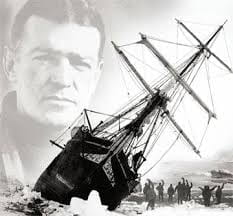

The winter weather slowed everything down a bit and, honestly, gave us time we don’t usually have. At one point, I walked into the living room while my wife had a documentary on and ended up sitting down to watch it with her. I wasn’t looking for a leadership lesson and definitely wasn’t expecting one. But as the story kept going, I found myself making connections to our work in the Leadership Challenge. The pressure (of doing more with less, AKA teachers on 7 of /8), the uncertainty (what if Prop A failed), and the way leadership showed up when things didn’t go as planned all felt familiar. It was a good reminder that sometimes the best leadership insights come from the most unplanned moments.
Building Trust: Shackleton and the importance of Trust
In 1914, Ernest Shackleton set out to lead the first land crossing of Antarctica. The plan was ambitious, the timeline was defined, and the ship Endurance was engineered for the mission. Like many leadership efforts, it began with confidence, preparation, and belief in the destination.
Then the environment changed.
The ship became trapped in ice and was eventually crushed. The original mission was no longer achievable. What followed was uncertainty, extreme conditions, and sustained pressure. In that environment, Shackleton’s leadership was not defined by strategy alone, but by trust.
And trust became the difference between survival and collapse.
Building Trust: Character, Competence, and Connection
Character
Shackleton’s crew watched him closely when the plan failed. What they saw was consistency. He did not panic, deflect blame, or distance himself from risk. He shared hardship, modeled restraint, and made decisions grounded in responsibility rather than ego.
Character, in leadership, is revealed when circumstances remove comfort and control. Trust forms when people believe their leader will act with integrity even when the outcome is uncertain.
Competence
Shackleton was not improvising blindly. He understood navigation, weather, risk, and human behavior. His decisions were informed by experience, observation, and sound judgment. Even under extreme stress, he remained deliberate rather than reactive.
Competence builds trust because people need to believe their leader understands the terrain. Calm leadership is rarely accidental. It is earned through preparation and the ability to assess reality clearly.
Connection
Perhaps most importantly, Shackleton stayed deeply connected to his people. He paid attention to morale, emotional strain, and group dynamics. He reassigned roles based on strengths and emotional resilience. He maintained routines not for productivity, but for stability.
Connection builds trust because people follow leaders who see them. Under pressure, relational awareness becomes a leadership skill, not a soft add-on.
Combined, character, competence, and connection created the trust that allowed Shackleton’s crew to endure prolonged uncertainty without fracturing.
Achieving Results: Clarity, Support, and Accountability
Trust alone, however, is not enough. Shackleton also delivered results. Not by chance, but through his disciplined leadership.
Clarity
When the environment shifted, Shackleton clarified what mattered most. He communicated priorities clearly and consistently. People understood the purpose of decisions and the direction of movement, even when the path was difficult.
Clarity reduces fear. When people understand the mission as it exists now, they can move forward with confidence rather than confusion.
Support
Shackleton ensured his crew had what they needed to endure (minus heat). That support was practical, emotional, and psychological. He structured routines, protected rest when possible, and intervened early when stress surfaced.
Support is not lowering expectations. It is creating conditions where people can meet them.
Accountability
Even in extreme conditions, standards did not disappear. Roles mattered. Discipline mattered. Responsibilities were upheld. Shackleton balanced compassion with expectation, ensuring that care and contribution existed together.
Accountability sustains momentum. It signals that every person matters and every role contributes to collective success.
Through clarity, support, and accountability, Shackleton turned trust into results: every member of the expedition survived.
What We Should Take Forward
Leadership frameworks are often learned in calm environments. Shackleton’s story reminds us that leadership is ultimately tested in disruption.
When pressure increases:
- Character anchors trust
- Competence earns confidence
- Connection sustains people
And when trust is established:
- Clarity aligns effort
- Support enables endurance
- Accountability delivers results
Leadership is not about rigidly pursuing a plan or abandoning ambition. It is about understanding what the moment requires and leading with both humanity and discipline.
The Rest of the Story
For nearly two years, Shackleton led his crew across drifting ice floes, through extreme cold, hunger, exhaustion, and uncertainty. His leadership was no longer about strategy documents or future milestones. It became deeply human and intensely present.
Shackleton paid attention to morale as deliberately as others might track progress. He structured daily routines to provide predictability. He reassigned roles based on temperament and emotional resilience, not rank. He watched closely for signs of isolation, despair, or fracture within the group.
Importantly, Shackleton did not lower standards or retreat from responsibility. He raised them. Discipline, accountability, and shared purpose remained essential. But they were applied in service of cohesion and survival, not optics or legacy.
When the situation demanded extraordinary action, Shackleton took extraordinary responsibility. He led a small crew on a perilous open-boat journey across the Southern Ocean to secure rescue, placing himself at the center of risk rather than insulating himself from it.
Every decision reflected a clear understanding of leadership under constraint:
when the environment becomes unforgiving, clarity, trust, and presence matter more than authority.
Against overwhelming odds, every member of the expedition survived.
- Which trust pillar do you lead with most naturally?
- Which result driver do you underuse when pressure increases?
- How do you intentionally move from trust to results?